


 Zoosystema
47 (33) - Pages 773-797
Zoosystema
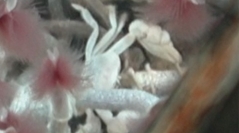
47 (33) - Pages 773-797The French multidisciplinary CHUBACARC 2019 cruise in the western Pacific sampled hydrothermal fauna at 18 different vent fields from five vent zones spanning 5000 km and explored the Kulo Lasi Volcano, an area with intense hydrothermal activity. At the periphery of the Kulo Lasi Caldera, a new species belonging to a new genus of bythograeoid crab was collected, here named Kallograea kulolasi n. gen., n. sp. Kallograea kulolasi n. gen., n. sp. is a small species, being already mature at a carapace width of 12 mm, and having well-differentiated gonopods and vulvae. It possesses several distinctive characters: carapace transversally elliptical and flat; chelipeds elongate, especially the very long and slender merus; major chela with blunt fingers; and a white setal patch on the cheliped propodus, resembling a downy pubescence that covers the superior margin of the cheliped palm and that extends over its inner and outer surfaces. Another species, Austinograea jolliveti Guinot & Segonzac, 2018, is provisionally assigned to the same genus. Kallograea jolliveti (Guinot & Segonzac, 2018) n. comb. differs by several characters: the second gonopod is relatively much shorter, the epistome is differently structured, the chela has a setal patch that is only present on the inner side of the palm, and there is a distinct coloured spot at the base of the fixed finger. The two congeneric species share the following characters: long chelipeds with elongated and slender meri; major cheliped (crusher) with thick blunt-tipped fingers; male sternopleonal cavity gently concave, relatively wide distally, and without any obvious depression for the tips of G1; G1 almost straight, obliquely directed, not crossing each other along distal parts; and G2 with a flagellum only slightly longer or shorter than the basal part. The vulvae are also rather large in the two species, occupying most of the surface of thoracic sternite 6. Comparison of Kallograea n. gen. with other bythograeoids of the western Pacific provided the opportunity to define and illustrate in greater detail the type species of Austinograea Hessler & Martin, 1989, A. williamsi Hessler & Martin, 1989, endemic to the North Western Pacific, as well as the two known species of Gandalfus McLay, 2007. The characters used to separate Austinograea and Gandalfus, and the taxonomy of the two genera are discussed.
hydrothermal vent crabs, CHUBACARC 2019, FUTUNA 1 and 3, Futuna volcanic Arc, Austinograea williamsi, Gandalfus puia, G. yunohana, new genus, new species