

 Naturae
2026 (3) - Pages 73-80
Naturae
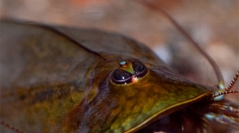
2026 (3) - Pages 73-80A small population of Triops cancriformis (Bosc, 1801) was discovered at the turn of the 2000s in forest ruts in the north-east of the Vienne department, when the species was thought to have disappeared from central France for decades. The closest populations currently known are indeed located in the Mediterranean arc, more than 400 km away, and are found in generally more open habitats. Monitoring undertaken since then, although occasional and sporadic, showed that a small population is still surviving (presence of ovigerous females and resistant-eggs in the sediment), but which does not seem to be able to reproduce every year, and with declining population size. Furthermore, genetic analyzes carried out in parallel are entirely compatible with the persistence here of a local relict population, and make it possible to rule out the hypothesis of an exogenous contribution (releases) as is always possible with these commercialized animals and very popular with aquarists. The short- and medium-term risks for this small isolated population (based on our current knowledge) are presented and discussed. Awareness-raising actions aimed at local stakeholders (owners, managers, surrounding municipalities) were undertaken and favorably received. Attempts to create small temporary ponds proved unsuccessful. From now on, more ambitious protection and conservation measures, carried out within a regulatory framework, should be considered.
Tadpole shrimp, relict species, forest ruts, ecology, conservation