


 Geodiversitas
48 (10) - Pages 179-184
Geodiversitas
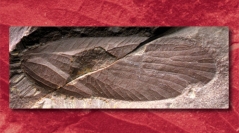
48 (10) - Pages 179-184In addition to their significance for ancient biogeography, the earliest occurrences of extant insect groups have gained particular importance over the past decade, as they are critical for temporally calibrating phylogenetic trees. In this context, the robustness of taxonomic assignments is crucial. The earliest fossil record of putative stoneflies (Plecoptera), from the Pennsylvanian, is based on a very limited number of species. The assignment of one of them, Gulou oudardi Schubnel, Perdu, Roques, Garrouste & Nel, 2019, from the Avion locality (Nord-Pas-Calais basin; France) and known from a single wing, is here reconsidered. Concordant evidence, including the presence of intercalary veins in the apical and postero-apical areas, and a CuA preserved as a concave groove, indicates that the specimen is not a stonefly forewing, but rather a hindwing of the Palaeozoic insect family Blattinopsidae (which ordinal affinities remain uncertain). More specifically, this hindwing can be confidently linked to a species known from a single forewing, also from the Avion locality, which constitutes the holotype of Avionblattinopsis oudardi Quispe, Roques, Garrouste & Nel, 2022. The two species are therefore synonymized as Avionblattinopsis oudardi (Schubnel, Perdu, Roques, Garrouste & Nel, 2019), n. comb.
Blattinopsidae, Fossil insect, Carboniferous, Pennsylvanian, Avion, reflectance transforming imaging, new combination