

 Comptes Rendus Palevol
25 (9) - Pages 155-172
Comptes Rendus Palevol
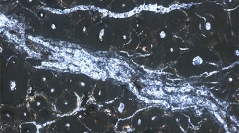
25 (9) - Pages 155-172Since the 19th century, vertebrate fossils from the Açu Formation (Potiguar Basin, northeastern Brazil) have received limited taphonomic attention, despite recent discoveries of various gnathostomes, including chondrichtyans, actinopterygians, dipnoans, crocodyliforms and dinosaurs. This study presents the first integrated macro- and microscale taphonomic analysis of vertebrate assemblages from selected outcrops of the Açu Formation. A total of 134 disarticulated vertebrate specimens, mainly vertebrae and limb bones, were examined, focusing on articulation, fragmentation, weathering, abrasion, bioerosion, root marks, and diagenetic features such as mineral replacement, pore filling, and fracturing. The assemblages record variable degrees of subaerial exposure and episodic transport prior to burial, as indicated by moderate abrasion, the predominance of weathering stage 2, insect bioerosion, tooth marks, and root traces. Petrographic analyses reveal extensive carbonate and iron oxide replacement, osteon infilling, and desiccation-related microfracturing, reflecting fossilization under generally humid conditions punctuated by intervals of reduced precipitation. Integrated sedimentological and taphonomic evidence indicates that the studied deposits accumulated within an estuarine floodplain system, most consistent with the upper, fluvial-dominated sector of an estuary. The predominance of fine-grained facies with pedogenic features, interbedded sandstones, and heterolithic bedding reflects episodic sedimentation under fluctuating hydrological conditions. The fossil assemblages comprise autochthonous to parautochthonous remains, recording localized burial, limited reworking, and temporal mixing during Cretaceous depositional processes.
Taphonomy, ichnology, diagenesis, estuary, Cretaceous