

 Comptes Rendus Palevol
24 (28) - Pages 563-585
Comptes Rendus Palevol
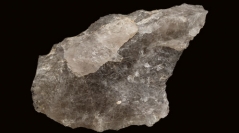
24 (28) - Pages 563-585For the understanding of Middle Paleolithic subsistence behaviors, Gruta da Figueira Brava (Setúbal, Portugal) is a key site, as it represents the earliest evidence of systematic subsistence exploitation of marine resources in Europe known to date. However, the associated lithic assemblage, more than 80% composed of quartz, has so far remained understudied. Although widely used during the Pleistocene and the Holocene, quartz, the most abundant mineral on Earth, has been traditionally considered as a “second-rate” resource. Due to the raw material’s specific fracture mechanics, quartz lithic assemblages have the tendency to be typologically and morphologically less standardized than flint ones. For these reasons, studies of quartz assemblages have been few and far between, especially when flint and quartzite ones, easier to analyze, are found alongside. Following techno-typological and techno-economic approaches, we carried out a study of a sample of quartz cores and blanks from three successive Figueira Brava human occupation phases spanning the 86-106 ka (thousands of years ago) interval. The results show that several reduction methods were successfully applied, displaying good management of the mechanical properties of the raw material. Alongside the Bipolar-on-Anvil technique, methods such as Levallois and Discoid were used, albeit following strategies somewhat different than with flint and quartzite. At Figueira Brava, the use of quartz – abundant locally and skillfully worked through a diverse range of reduction methods – reflects the good adaptation of the cave dwellers to their environmental context.
Neanderthal, quartz, lithic technology, MIS 5