

 Cryptogamie, Bryologie
47 (6) - Pages 101-114
Cryptogamie, Bryologie
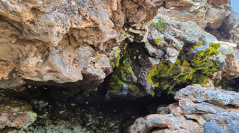
47 (6) - Pages 101-114Fumaroles generate steep microclimatic and edaphic gradients that allow bryophyte communities to persist where the surrounding landscape is too dry or extreme. To explore this phenomenon, we surveyed bryophytes across the Khaybar White Volcano Geopark (north-western Saudi Arabia) during two field campaigns in 2024 and 2025, using a systematic 5 × 5 km grid to reduce spatial bias. Within fumarolic habitats, we counted vents by diameter class (0-2, 2-10, 10-50, >50 cm) in GPS-referenced plots and recorded bryophyte presence and abundance following the Braun-Blanquet scale. Across 188 relevés distributed among 11 fumarolic sites, we collected 1806 records representing 37 bryophyte taxa – about 72% of the 51 species known from the entire Geopark. Thirteen species were found exclusively in fumarolic microhabitats, and seven showed tropical or paleotropical affinities. Statistical analyses (Spearman correlations, n = 188) revealed that both species richness and cumulative abundance were highest in plots containing more medium-sized vents. These values declined near larger vents (>50 cm) and showed no clear relationship for smaller ones (≤10 cm). The association between medium vent abundance and bryophyte richness remained consistent across sites. Tropical species richness did not vary systematically with vent size but was clearly structured by orientation, with northerly and north-easterly slopes hosting most tropical taxa. Even so, the results suggest that clusters of medium-sized fumaroles create locally buffered conditions that support bryophyte establishment in this hyper-arid volcanic setting. We propose a preliminary Bryothermal Index (BTI) that integrates community-level indicators – species richness, abundance, and the proportion and fertility of hygrophilous or tropical-affinity taxa – to estimate geothermal influence. Future research should include high-frequency temperature and humidity logging, gas and substrate analyses, and replicated transects around vents to clarify mechanisms and validate the BTI. Despite their small extent (<1 ha), the Khaybar fumaroles stand out as microrefugia and should be considered for targeted micro-reserve protection and long-term ecological monitoring.
Fumaroles, geothermal microrefugia, bryophyte diversity, tropical-affinity taxa, hygrometric buffering, Arabia, orientation effects, ecology, steam vents, bryothermal Index (BTI)