


 Anthropozoologica
61 (1) - Pages 1-19
Anthropozoologica
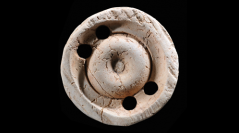
61 (1) - Pages 1-19Although Gallo-Roman craftsmen rarely worked with deer antlers they were nevertheless familiar with its various properties –length, strength and and elasticity superior to that of bone– as well as its symbolic value which was embodied in objects carved from the base of the antler, commonly known as “deer bantler medallions”. The latter have been the subject of numerous studies, but it seemed important to review their spatial distribution by updating their inventory, to situate this material within the Gallo-Roman craft of hard materials of animal origin, and to emphasize the strong symbolism of the deer antler. Moreover, deer meat was only eaten occasionally, as shown by the scarcity of these bones among the faunal finds, indicating that hunting was not very nourishing. It is nevertheless possible to reconstruct the stages involved in cutting up its carcass, based on traces found on the bone remains. It was sometimes hunted in game parks, outbuildings of large villae, whose existence mentioned in ancient texts and possibly illustrated by archaeozoology.
Deer antler talisman, craftsmanship, game park.