
 Adansonia
48 (7) - Pages 43-53
Adansonia
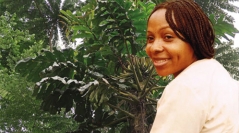
48 (7) - Pages 43-53Colette Ntépé-Nyamè (flor. 1970-1988) was the first African botanist to specialize in the systematics of the Araceae, beginning with her doctoral studies at the Université Louis Pasteur at Strasbourg and culminating in the family account for the Flore du Cameroun. She was the first woman and the first African botanist to contribute a volume to this major Flora series. Her treatment, though published almost 40 years ago, remains foundational for aroid taxonomic studies in tropical Africa, being the most extensive and detailed so far published for any country and covering the region where aroids are most diverse; through her own collections she made the largest contribution of herbarium specimens of any field collector to this treatment. She was the first botanist to study African aroid hemi-epiphytes in detail and she made innovative discoveries in the genus Culcasia P. Beauv. where she significantly advanced the taxonomy of this notoriously difficult genus. The importance of her work has not previously been recognized sufficiently, but became plain during the recent preparation of the Araceae treatment for the Flore du Gabon. A lasting testament to her botanical perspicacity and determination was the discovery and publication of the magnificent central African hemi-epiphyte Cercestis camerunensis (Ntépé-Nyamè) Bogner (as Rhektophyllum camerunense Ntépé-Nyamè), and its untangling from the sympatric C. mirabilis (N.E.Br.) Bogner. Her early death robbed tropical Africa of an eminent systematist of Araceae.
Flore du Cameroun, Central Africa, René Letouzey, hemi-epiphytes, Yaoundé herbarium, Université de Yaoundé