


 European Journal of Taxonomy
1012 (49) - Pages 49-80
European Journal of Taxonomy
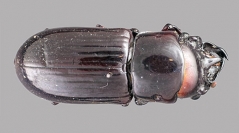
1012 (49) - Pages 49-80A revision of the Neotropical darkling beetle genus Phrenapates Gray, 1832 (Tenebrionidae: Phrenapatinae) is conducted. The genus previously contained six species ranging from Central to South America. Nearly 350 specimens of Phrenapates were examined to define morphology and evaluate previously published species. The genus is redescribed with its taxonomic history and classification summarized. Two new species are described: Phrenapates gilloglyi Rincon & Smith sp. nov. from the Cerro Jefe Mountain located within Cerro Azul, Panama; and Phrenapates fortunaensis Rincon & Smith sp. nov. from the Fortuna Forest Reserve in Panama. A replacement name, Phrenapates erratus Rincon, Lumen & Kamiński nom. nov., is introduced for Phrenapates latreillei Gebien, 1910 to avoid homonymy with Phrenapates latreillei Lacordaire, 1859. Lectotypes are designated for Phrenapates bennettii Gray, 1832, P. dux Gebien, 1910, P. educator Gebien, 1910, P. erratus, P. latreillei, and P. ohausi Gebien, 1910, to stabilize species concepts. Phrenapates mandibularis Gebien 1910 is treated as a junior synonym of Phrenapates latreillei Lacordaire, 1859. As a result, a total of eight species is now recognized (P. bennettii, P. ohausi, P. dux, P. latreillei, P. educator, P. erratus, P. gilloglyi, and P. fortunaensis). Distribution maps and a key to the species of Phrenapates are provided. Dissections confirmed that unlike most other Tenebrionidae, female Phrenapates lack well-sclerotized ovipositors, with only coxite 4 and paraproct remaining for oviposition. This reduction is potentially attributed to their unusual life history, as Phrenapates live in subsocial colonies inside dead wood and may not need to inject eggs into substrate.